Your Professional Steel Deoxidizer Supplier
Anyang Juxin Ferroalloy Co., Ltd. is located in the Industrial Development Zone of Longquan Town, Long'an District, Anyang City. The site boasts convenient transportation, abundant resources, and a superior geographical location. The factory operates under a scientific management model, possesses strong technical capabilities, and employs comprehensive testing methods. Its primary products include rare earth silicon-magnesium ferroalloy, nodularizing agents, inoculants, silicon iron powder, and silicon manganese. Due to consistent product quality, the company has earned the trust of its customers.
Our Certificate
We are certified under the ISO 9001 Quality Management System. This certification reflects our commitment to maintaining high-quality standards in our processes and services.
Production Market
Domestic Market: Serving major steel, foundry, and metallurgical enterprises nationwide
International Market: Conducting import and export operations with products distributed to numerous countries and regions worldwide
Market Positioning: Direct manufacturer supply, consistent quality, and high cost-performance ratio
Our Service
1. Pre-sales: Product selection guidance, technical solutions, and quotations
2. During sales: Rapid order response, transparent production progress, on-time delivery, and logistics tracking
3. After-sales: Prompt resolution of quality issues, technical guidance, usage training, and long-term stable supply assurance
-
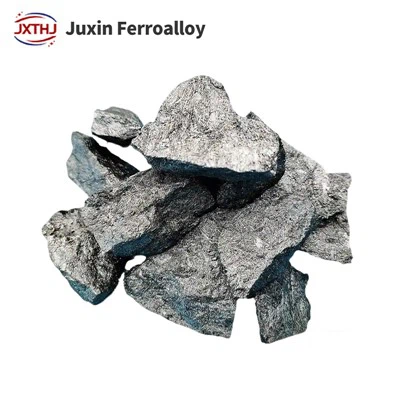
![Silicon Manganese Deoxidizer]() Silicon Manganese DeoxidizerSilicon-Manganese Alloy is a composite ferroalloy primarily composed of manganese, silicon, and iron, with small amounts of carbon and trace elements. Its main functions include deoxidation,
Silicon Manganese DeoxidizerSilicon-Manganese Alloy is a composite ferroalloy primarily composed of manganese, silicon, and iron, with small amounts of carbon and trace elements. Its main functions include deoxidation, -
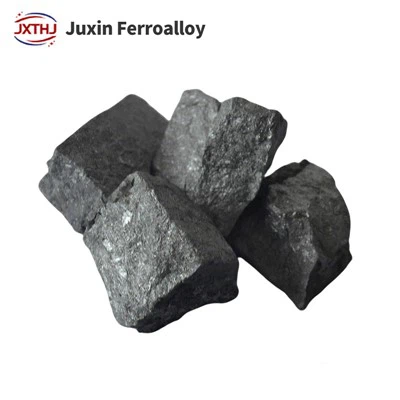
![Silicon Chromium Alloy]() Silicon Chromium AlloyDuring the steelmaking process, it is primarily used as a deoxidizer, alloying additive, and reducing agent, effectively enhancing the strength, hardness, and corrosion resistance of steel.
Silicon Chromium AlloyDuring the steelmaking process, it is primarily used as a deoxidizer, alloying additive, and reducing agent, effectively enhancing the strength, hardness, and corrosion resistance of steel. -
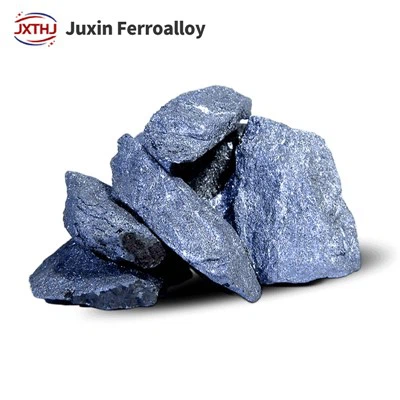
![Calcium Silicon Deoxidizer]() Calcium Silicon DeoxidizerStandard particle sizes for calcium silicate: Natural calcium silicate blocks. Standard calcium silicate blocks: 10–100 mm, 10–80 mm, etc.. Calcium silicate granules: 1–3 mm, 3–8 mm, 8–15 mm, etc..
Calcium Silicon DeoxidizerStandard particle sizes for calcium silicate: Natural calcium silicate blocks. Standard calcium silicate blocks: 10–100 mm, 10–80 mm, etc.. Calcium silicate granules: 1–3 mm, 3–8 mm, 8–15 mm, etc..


Product Introduction
Silicon chromium alloy is an alloy of iron, chromium and silicon containing not less than 30.0% chromium and not less than 35.0% silicon. Its production process is divided into two types: one-step method (usually called "slag-containing method" or "ore method") and two-step method (usually called "slag-free method"). The raw materials used in one-step smelting include silica, chromium ore and coke. The raw materials used in the two-step smelting include silica, carbon ferrochrome, and steel scraps. Both smelting methods use coke as the reducing agent.
The source of silicon in the alloy is mainly SiO2 in silica, and the sources of chromium are chromium ore and carbon ferrochrome. They are all produced by smelting in ferroalloy submerged arc furnaces. It is mainly used as a reducing agent for the production of medium-low carbon ferrochrome and micro-carbon ferrochrome and as an intermediate alloy agent for steelmaking. According to the content of Si, Cr, and C, ferro silicon chrome alloys can be divided into many different brands of ferro silicon chromium alloys. The composition phase of its alloy system is, Si>50% is composed of (Fe·Cr)Si2, Si>40% is composed of (Fe·Cr) Si2 and (Fe·Cr)Si, Si>30% is composed of (Fe· It is composed of Cr)Si and (Fe·Cr)Si. When Si<19%, (Fe·Cr)3C and (Fe·Cr)23C6 account for the majority.
Main Grades
|
Product Grade |
Manganese (Mn) Content |
Silicon (Si) Content |
Carbon (C) Content ≤ |
Phosphorus (P) Content ≤ |
Sulfur (S) Content ≤ |
Main Applications |
|
FeMn68Si18 |
65.0%-72.0% |
17.0%-22.0% |
1.8% |
0.25% |
0.04% |
Deoxidation and alloying of carbon steel and low-alloy steel |
|
FeMn64Si18 |
60.0%-67.0% |
17.0%-20.0% |
1.8% |
0.25% |
0.04% |
Production of structural steel and shaped steel |
|
FeMn68Si22 |
65.0%-72.0% |
20.0%-23.0% |
1.2% |
0.25% |
0.04% |
Smelting of high-strength steel and engineering steel |
|
FeMn64Si27 |
60.0%-67.0% |
25.0%-28.0% |
0.5% |
0.25% |
0.04% |
Production of high-end special steel and welding consumables |
Silicon addition alters different mechanical properties of Aluminum, making it suitable for multiple applications. Here’s a look at some key properties of AlSi Alloys.
Density
Aluminum-silicon alloys do maintain a low density, similar to pure aluminum. So, they remain suitable applications where weight is a concern.
Strength
The addition of silicon enhances the strength of aluminum. Alloys with 6% to 12% silicon content exhibit optimal mechanical properties. Their tensile strength ranges between 140 to 260 MPa.
Corrosion Resistance
Pure aluminum-silicon alloys are corrosion-resistant, even in saltwater environments. The marine applications can benefit from it.
Casting Properties
The biggest change that silicon brings is a lower viscosity of molten alloy. This improves the fluidity of the material – and the alloys also enjoy a low melting point. Plus, silicon also reduces shrinkage during solidification. All these reasons explain why AlSi alloys are sometimes called casting alloys of Aluminum.
Wear Resistance
Hypereutectic alloys with more than 13% silicon, have high wear resistance due to the presence of primary silicon particles.


Silicon-chromium alloys have a wide range of applications in metallurgy, alloy casting and other fields.
Silicon-chromium alloy is an alloy made by mixing elements such as silicon, chromium, and carbon in a certain proportion. Its main uses are as follows:
Microalloying: Silicon-chromium alloy can be added to steel for microalloying, so that steel contains stable silicon and chromium elements, thereby improving the mechanical properties, wear resistance and oxidation resistance of steel.
Stainless steel manufacturing: Silicon-chromium alloy is one of the important raw materials in stainless steel manufacturing. It can improve the corrosion resistance, heat resistance, and hardness of steel, among other things.
Alloy casting: Silicon-chromium alloys can be used in the foundry industry to manufacture high-performance alloys, such as casting aero engine blades, rocket engine parts, etc.
Iron and steel smelting: Silicon-chromium alloy can be added to the steelmaking process of steel for deoxidation, carburization, adjustment of steel composition, etc.
Smelting process
There are two methods of smelting silicon-chromium alloy, one-step method and two-step method. The one-step method is also called the slag method; the two-step method is also called the no-slag method. The one-step method is to add chromium ore, silica and coke into the furnace together to smelt silicon-chromium alloy. The first step of the two-step method is to add chrome ore and coke to the first electric furnace to smelt high-carbon ferro chrome; the second step is to crush high-carbon ferro chrome and put it into another electric furnace together with silica and coke Inside, smelting silicon-chromium alloy. At present, my country adopts two-step method to smelt silicon-chromium alloy in industrial production, and a small part uses one-step method.
Packing
1MT big bags.
25KG small bags into 1MT big bags.
Iron drums.
The packaging can according to customer's requirement.
FAQ
We're well-known as one of the leading steel deoxidizer manufacturers and suppliers in China, featured by quality products and good price. Please rest assured to wholesale bulk steel deoxidizer for sale here from our factory. Customized orders are welcome.
Silicon Manganese Deoxidizer, deoxidizer of steel, Silicon Chromium Alloy