Product Description
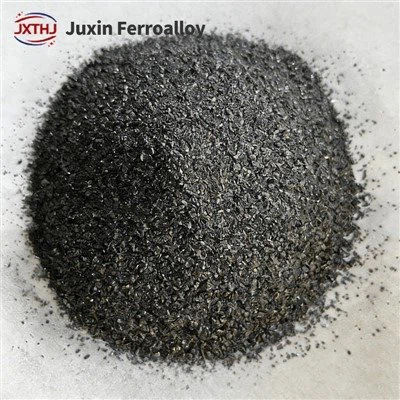
Pipe mold powder is a critical functional material used in the centrifugal casting of ductile iron pipes and other cast pipes. It is primarily a ferrosilicon-based composite material that, when applied to the inner wall of the mold, serves a dual purpose of metallurgical control and process assurance.
- Positioning: The final critical additive in the centrifugal pipe casting process, used to control the solidification microstructure and ensure successful demolding and mold protection.
- Composition: Primarily ferrosilicon-based. Contains silicon, iron, and trace alloys. Refractory barrier types contain quartz sand, bentonite, carbonaceous materials, and additives.
- Properties: Stable inoculation effect, low dimensional sensitivity, and easy formation of a barrier layer at high temperatures, which slows inoculation decay and is suitable for high-frequency centrifugal casting cycles.
- Applications: Primarily used in centrifugal casting of ductile iron pipes, with limited use in gray iron pipes and similar applications. When cracking occurs in the middle to late stages of the pipe mold, zinc powder or aluminum powder can be added to improve pipe extraction.
Six Core Functions
1. Enhanced inoculation and microstructural control: Instantaneous inoculation reduces the degree of undercooling in molten iron, inhibits the formation of white cast iron carbides, promotes graphite spheroidization, and improves spheroidization rate and graphite ball count.
2. Improved surface quality: Eliminates surface porosity and pinholes in cast pipes, reduces sand adhesion and scratches, and ensures surface finish.
3. Demolding and Lubrication: Forms a lubricating barrier layer, reduces friction between the cast pipe and the mold, resolves difficulties in pipe extraction, and minimizes pipe scratches and cracks.
4. Mold Protection and Lifespan Extension: Isolates high-temperature molten metal from the mold, mitigates thermal shock, alleviates internal wall cracking, extends mold lifespan, and reduces mold change costs.
5. Stable Dimensional Accuracy: Regulates solidification and cooling rates, reduces shrinkage deformation, and improves dimensional consistency of the cast pipe, such as diameter and wall thickness.
6. Production Efficiency Optimization: Increases first-pass yield, reduces rework and scrap, shortens production cycles, and facilitates automated continuous operations.
Key Points for Use
Application Method
Typically applied by spraying or sprinkling. Ensure even coverage of the inner wall of the pipe mold; the coating thickness should be adjusted according to the process and pipe diameter.
Formulation Adjustment
Adjust the formulation based on the cast pipe material (ductile iron/gray iron), pipe diameter, and condition of the pipe mold. If cracking occurs during the middle or late stages, zinc powder or aluminum powder can be added to aid in demolding.
Impact on Quality
Its quality directly determines the pass rate, surface grade, and production efficiency of cast pipes, with a particularly significant impact on the production of small-diameter ductile iron pipes.
FAQ
Q: Where is mold release powder primarily used?
A: It is primarily used in the production of centrifugal cast ductile iron pipes.
Q: What is the function of mold release powder?
A: It promotes graphitization, prevents white cast iron, protects the mold, and improves the surface quality of cast pipes.
Q: How is mold powder used?
A: It is evenly sprayed onto the inner walls of the centrifugal machine mold and forms a film under high temperatures.
Q: What quality indicators should be considered for mold powder?
A: Stable composition, uniform particle size, good flowability, and strong film-forming properties.
Q: What is the difference between mold powder and ordinary inoculants?
A: Mold powder serves the dual purpose of inoculation and mold protection, while ordinary inoculants are solely responsible for inoculation.
Hot Tags: pipe mold powder, China pipe mold powder manufacturers, suppliers, factory